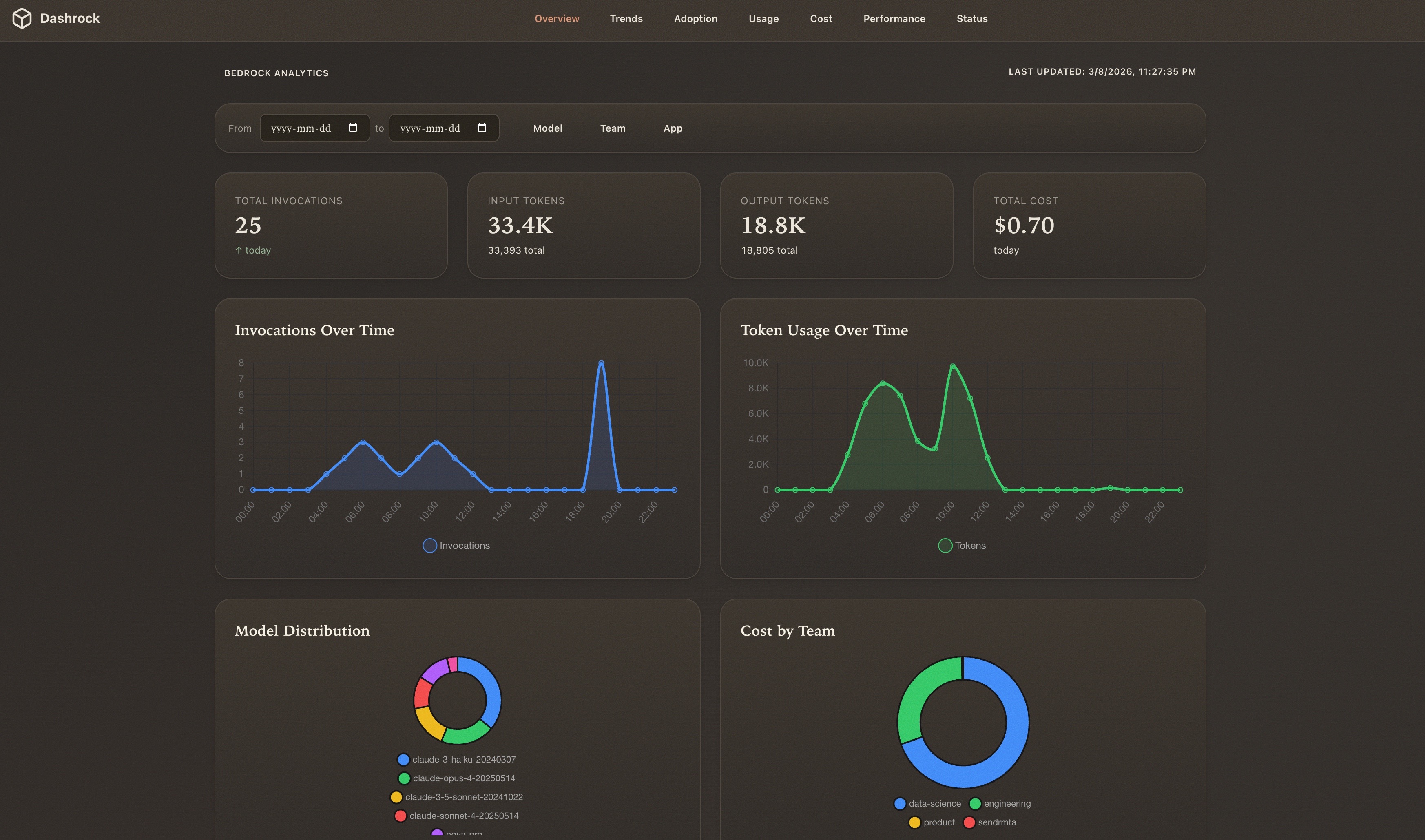
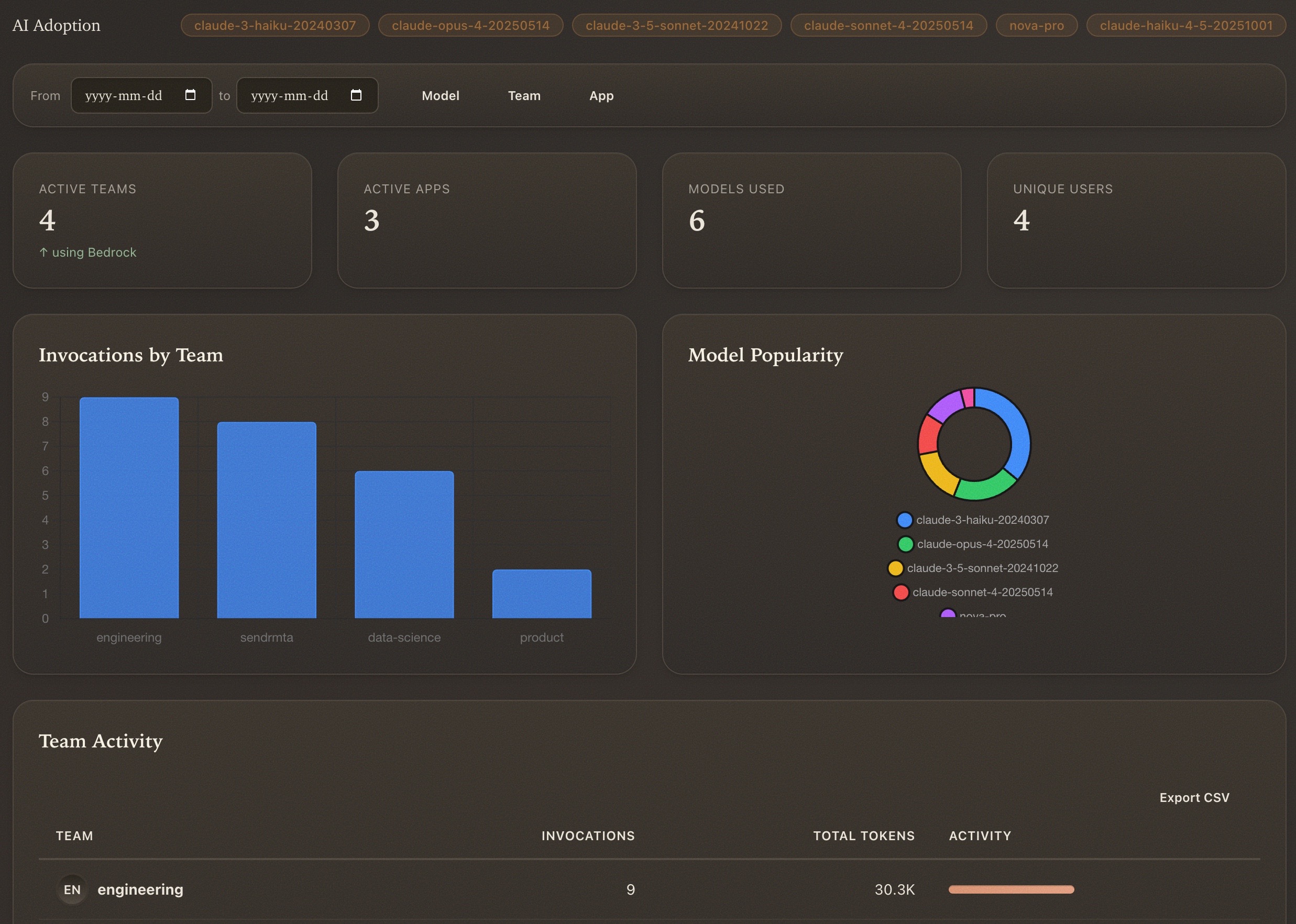
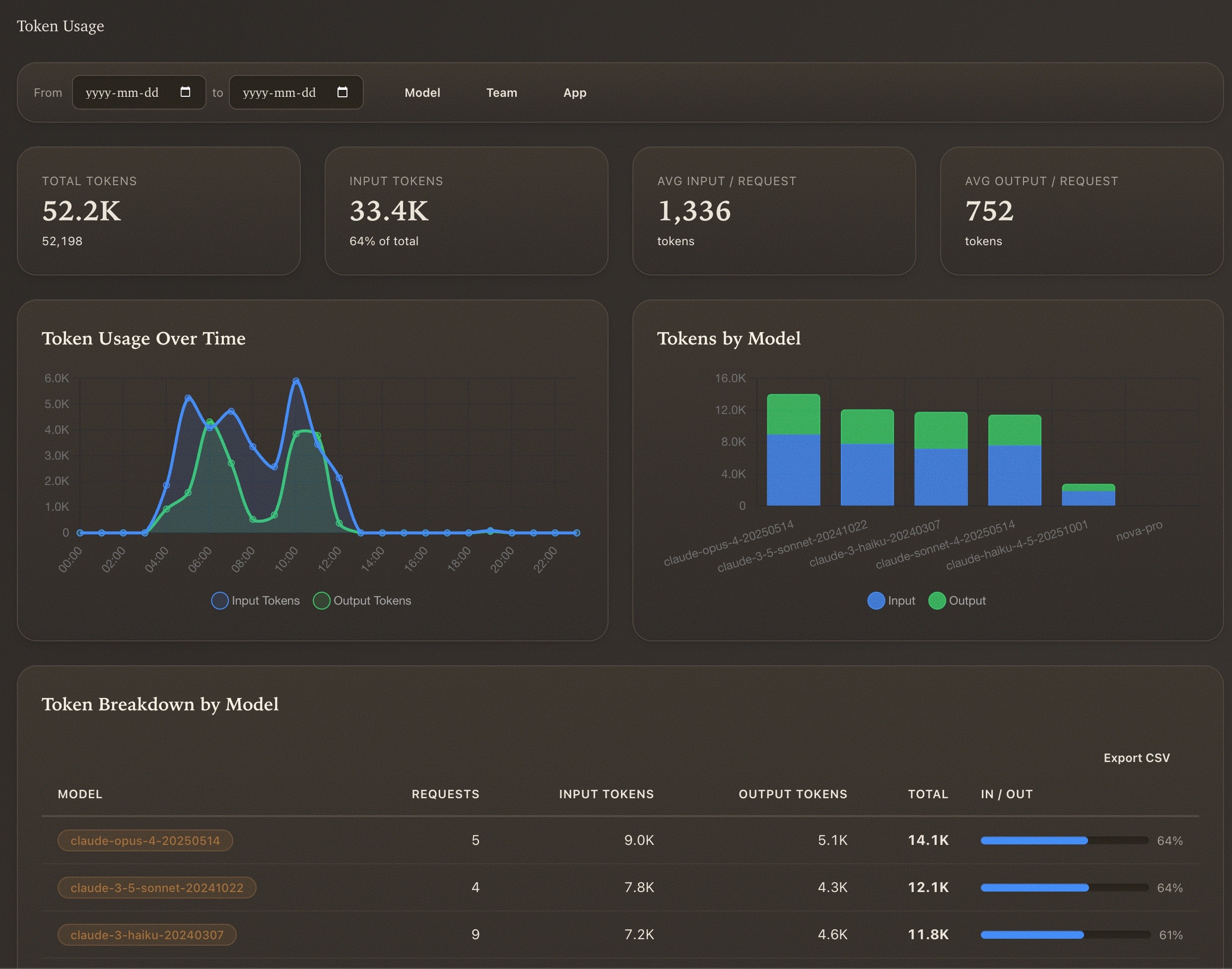
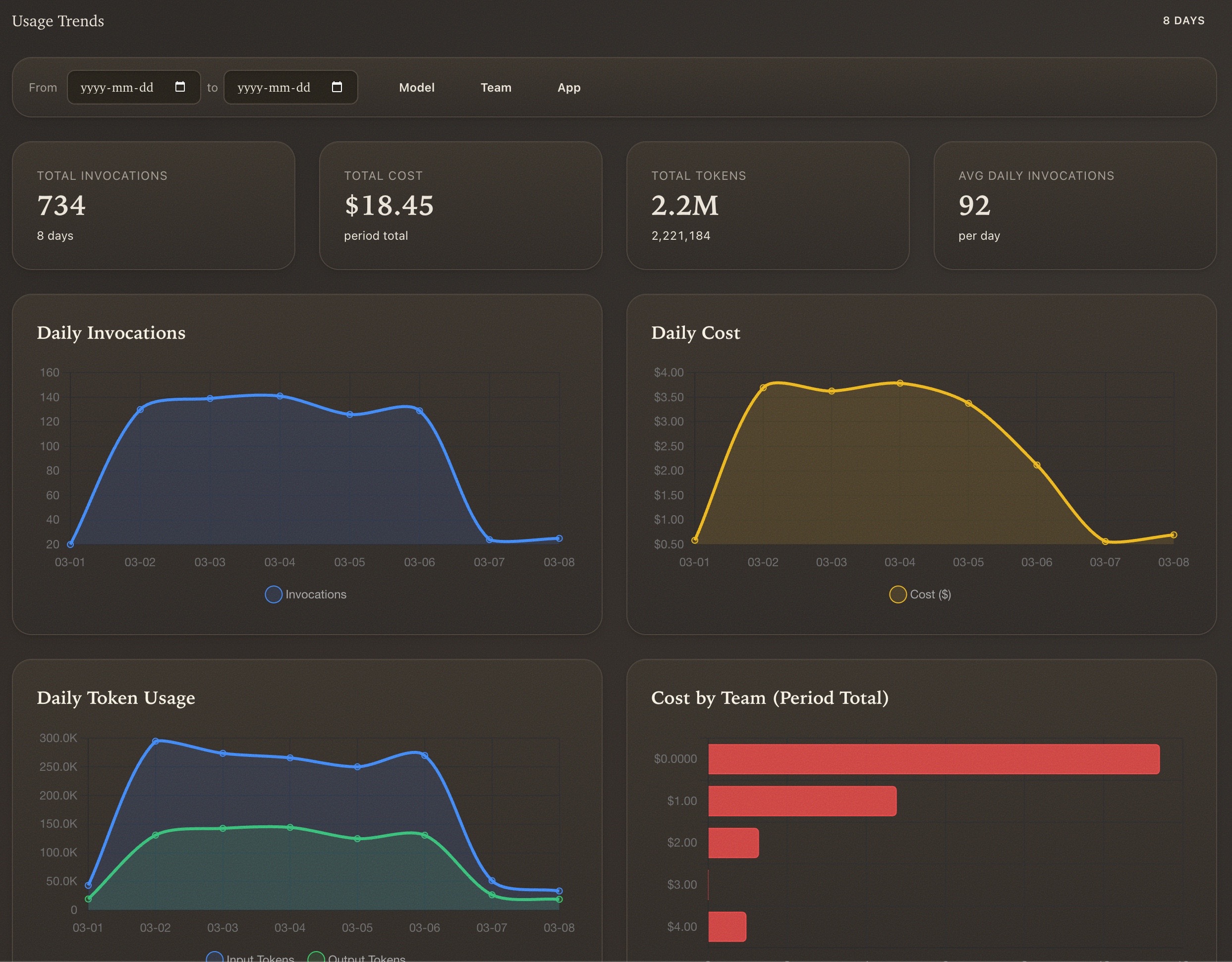
"Built dashrock.app, needed to beautifully collect stats on Bedrock, separate respect to @staskulesh for the UI tool."
@Marat_Galiev (Marat Galiev) · Mar 9, 2026 · 3,342 views · 19 likes · 17 bookmarks
What it does
Dashrock is a serverless analytics platform for AWS Bedrock. It collects and visualizes LLM usage data across teams and applications — costs, token counts, model distribution, latency, and trends over time. Teams define apps and members in a simple YAML config, deploy via SST in minutes, and get a full analytics dashboard with no ongoing infrastructure to manage.
Dashrock uses DAUB for the entire dashboard UI — cards, tables, navigation, layout containers, and form elements. The classless CSS approach let Marat build clean, consistent interfaces rapidly with AI code assistance. DAUB's theme variables provide dark/light mode and the tactile, considered aesthetic that makes the analytics feel polished rather than utilitarian.
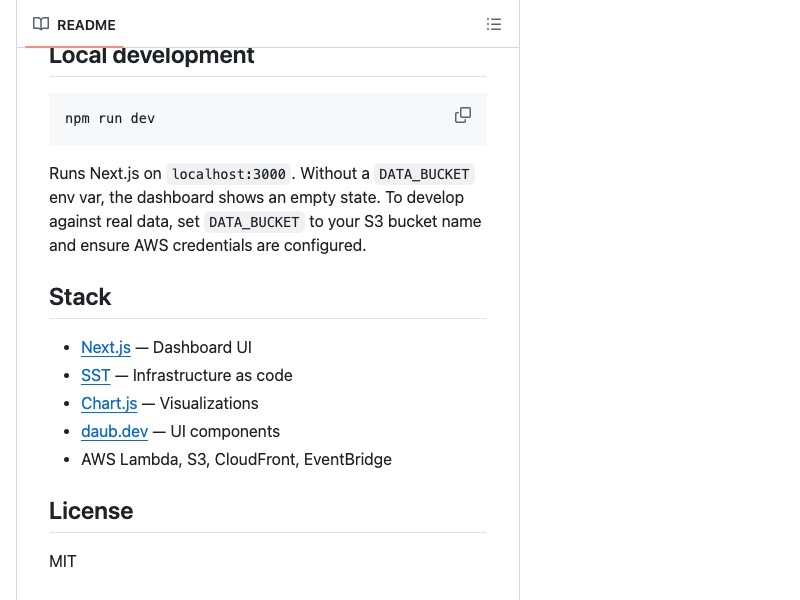
DAUB is credited in the project footer ("UI/UX built with daub.dev") and listed as a key dependency in the README tech stack.
"Daub gives you the speed of a utility framework with the polish of a design system. Built two production apps with it and would reach for it again without hesitation."
Marat, Dashrock
Tamp
Transparent HTTP proxy that compresses Claude API requests in real-time. Save up to 50% on input tokens — zero config, zero latency.
"Claude Code sends full conversation history every turn — tool results pile up fast. Tamp sits between your client and Anthropic, compressing input tokens by up to 50% without changing a thing about how Claude behaves."
The problem Tamp solves · Mar 2026
What it does
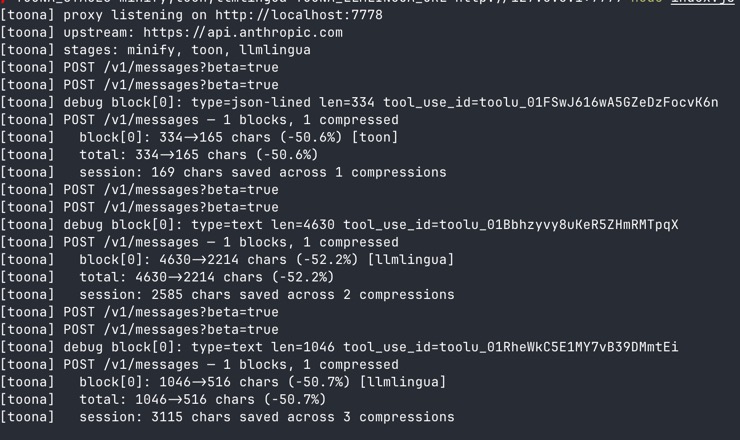
Tamp is a local HTTP proxy that intercepts Claude API requests and applies a multi-stage compression pipeline before forwarding them upstream. Claude Code (and any Anthropic API client) sends verbose tool results on every turn — pretty-printed JSON from Read, raw CLI output from Bash, full file listings from Grep and Glob. These accumulate to 100K+ tokens in minutes, driving up cost and exhausting context windows.
Tamp fixes this transparently. Set ANTHROPIC_BASE_URL=http://localhost:7778, run npx @sliday/tamp, and every API call gets compressed on the fly. Responses stream back untouched. Claude doesn't know the difference.
Tamp classifies each content block (JSON, prose, already-compressed) and routes it through the appropriate stages:
Stage 1 — JSON Minification: Pretty-printed JSON is minified. Zero risk — Claude handles minified JSON perfectly. ~15-20% savings.
Stage 2 — TOON Encoding: Tabular/array JSON is converted to TOON format, a compact alternative representation. ~40-60% savings over minified JSON.
Stage 3 — LLMLingua-2 (optional): Natural language prose is compressed via a Python sidecar. Lossy but meaning-preserving. 2-20x compression.
Images, system blocks, tool schemas, and content under 200 characters are never touched. A cache-safe mode (default) only compresses new content in the latest user message, preserving Anthropic prompt cache hit rates.
The Tamp marketing site (tamp.dev) is built entirely with DAUB's classless CSS. The landing page uses DAUB's typography system, spacing tokens, and theme variables to create a clean developer-focused presentation — no custom CSS classes needed. DAUB's CDN delivery (daub-ui@latest) means the site loads fast with zero build step.
The tactile aesthetic works particularly well for developer tools — it makes a terminal proxy feel polished rather than bare-bones, which matters when you're asking developers to route their API traffic through your software.
Graceful error recovery — compression failures fall back to original content
Optional LLMLingua-2 sidecar for prose compression
570 LOC total — small, auditable, no framework dependencies
Why it matters
Extended Claude Code sessions with heavy tool use can burn through context windows and rack up significant API costs. Tamp addresses this at the transport layer — no changes to your workflow, no changes to Claude's behavior, just smaller requests. The 50% savings compound across a full development session: a typical hour of Claude Code work that would consume 500K input tokens drops to ~250K. That's real money at Anthropic's pricing.
Dwarf Land
AI-powered civilization simulator. Up to 300 autonomous dwarves live across 125+ real-world cities, making decisions with tiered LLMs. The world runs 24/7 on Cloudflare Workers.
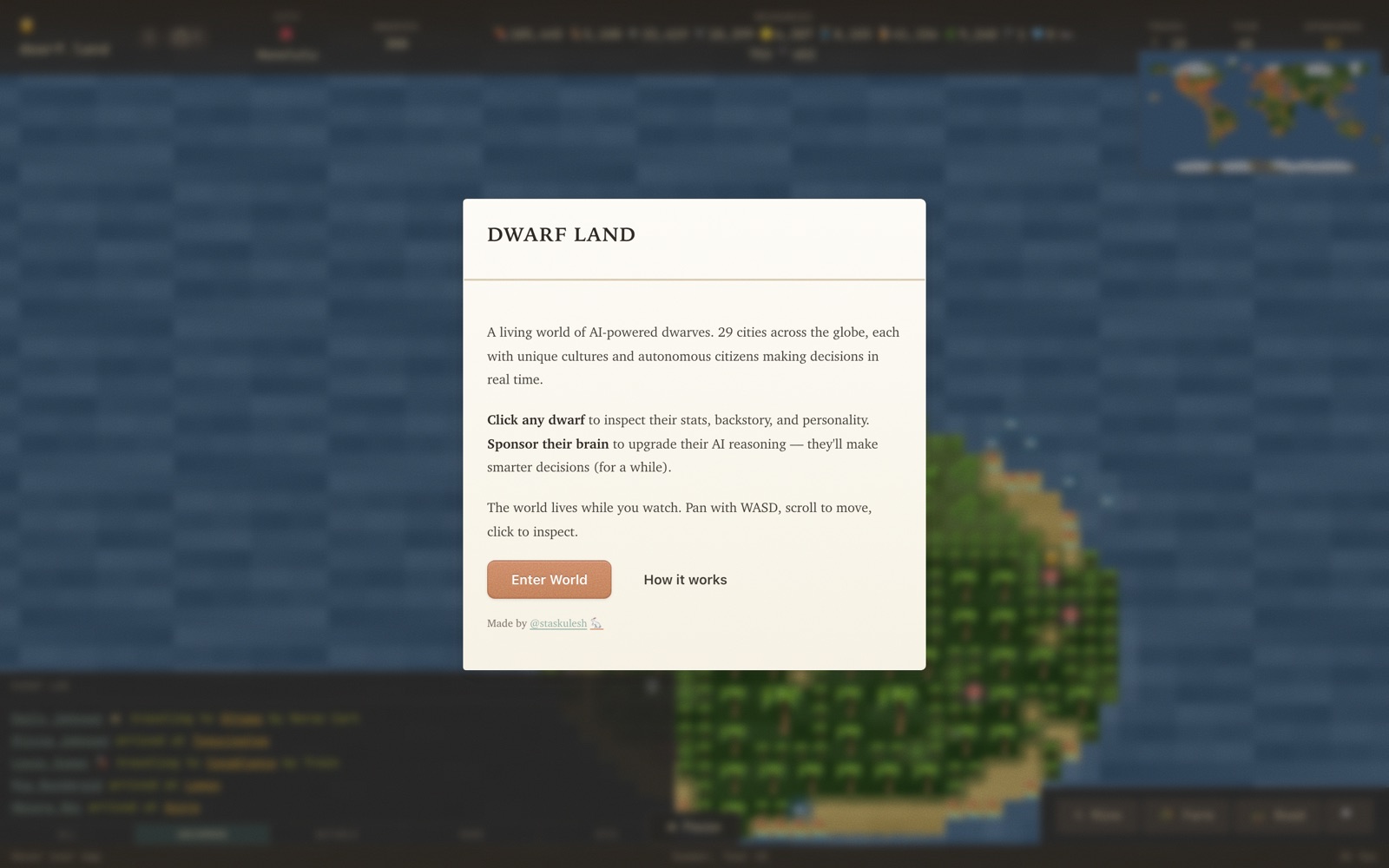
"A living world of AI-powered dwarves. Click any dwarf to inspect their stats, backstory, and personality. Sponsor their brain to upgrade their AI reasoning. The world lives while you watch."
The welcome screen · dwarf.land
What it does
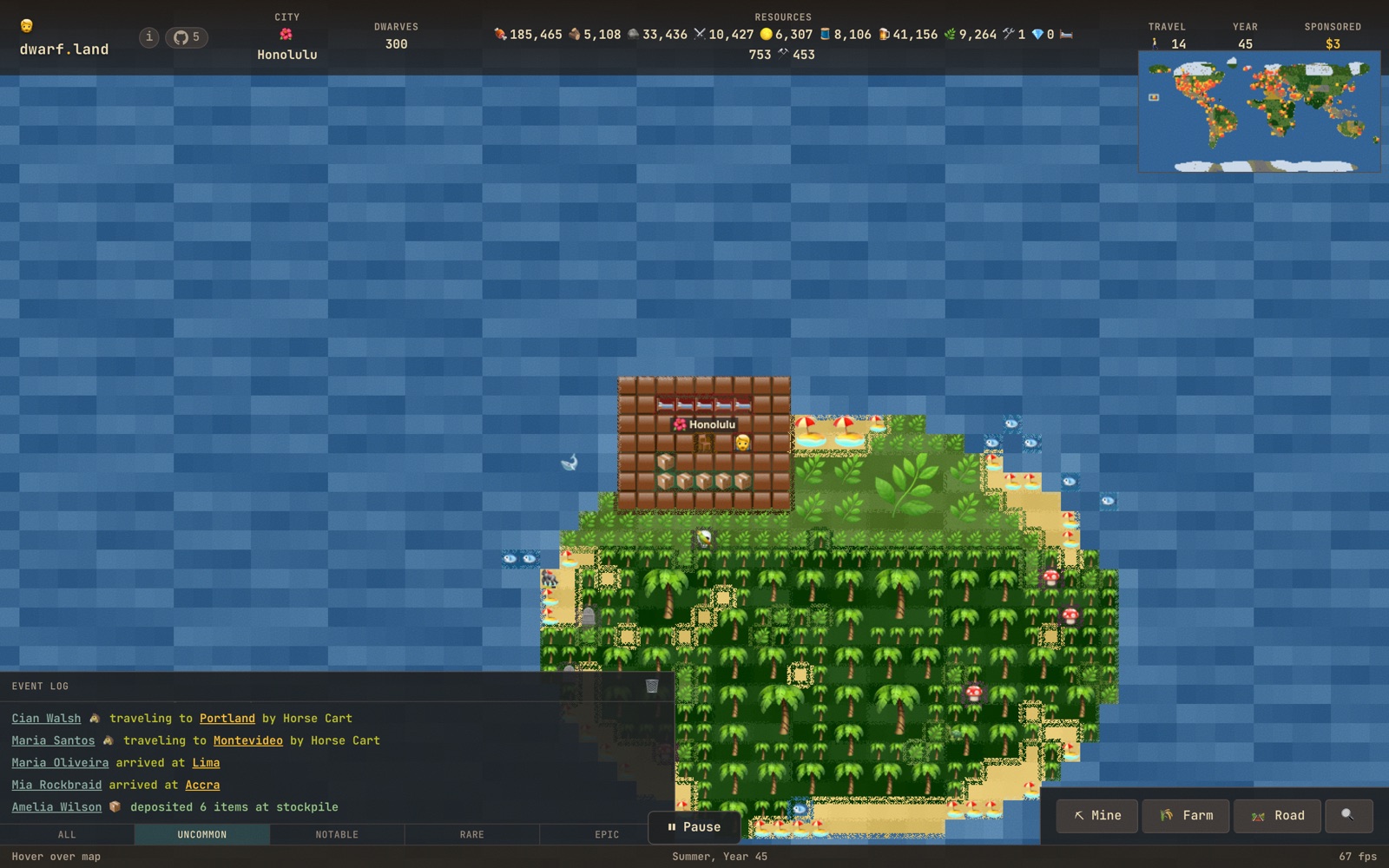
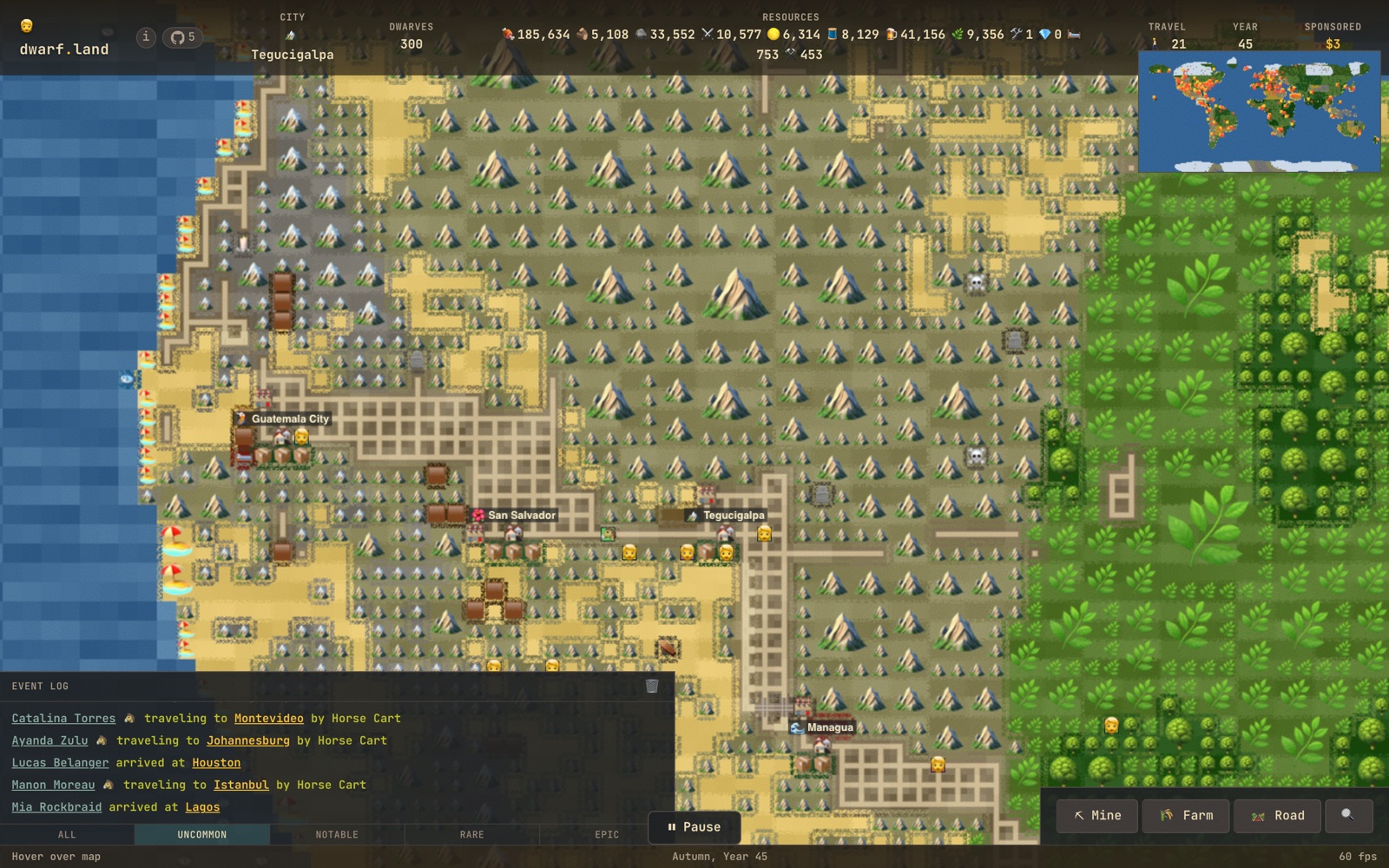
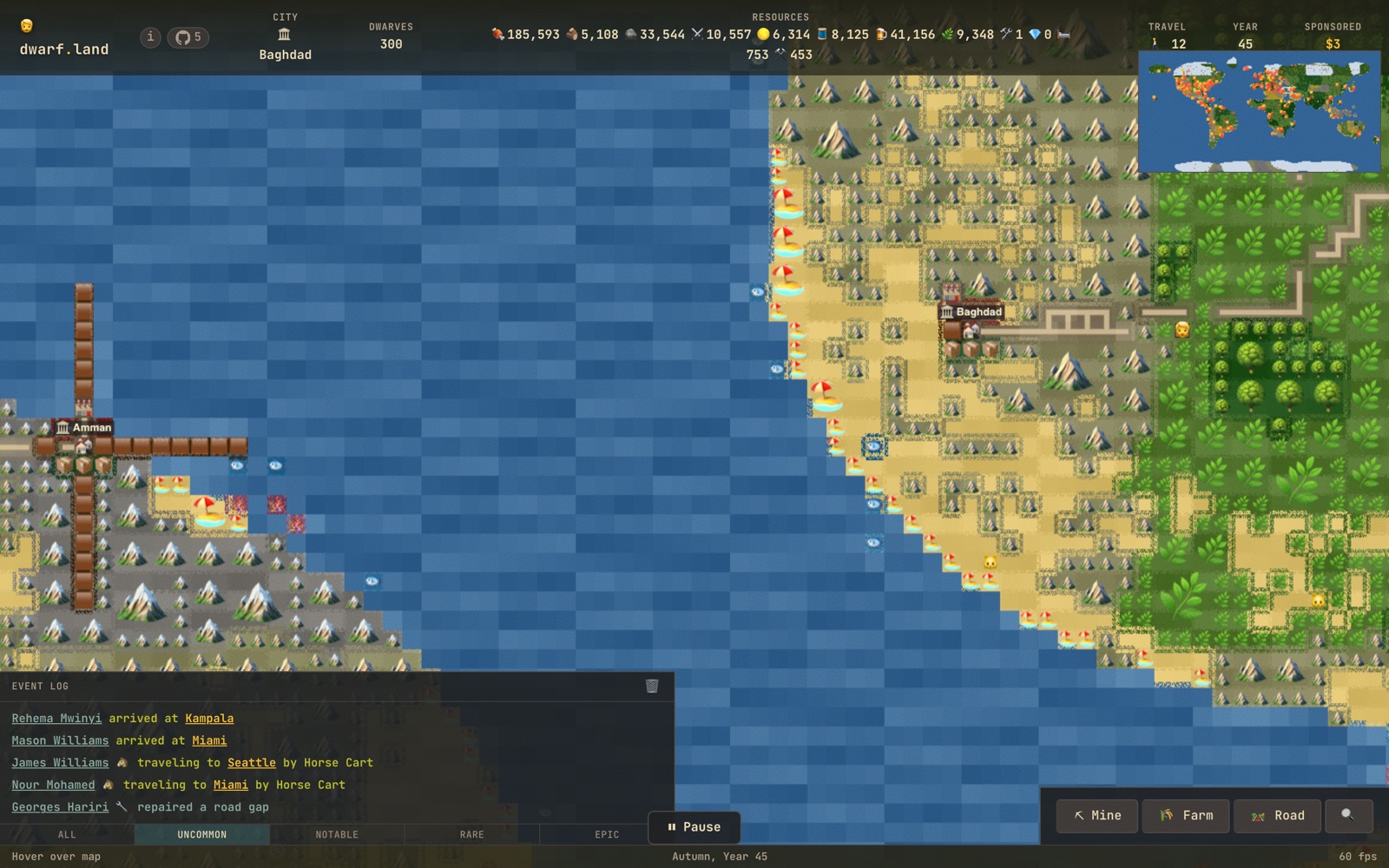
Dwarf Land is a persistent civilization simulator rendered as an emoji tile planet — continents, oceans, mountains, jungles, deserts, and a map that wraps horizontally like a globe. Dwarves with D&D stats and culturally accurate names mine, farm, craft, trade, raise families, tame animals, and build roads between cities. Nobody scripts their behavior: each decision comes from an LLM call routed through a 4-tier model system, and the world keeps running whether you watch or not. State saves every 60 seconds; your dwarves remember everything.
Welcome modal — pure DAUBHonolulu, Year 45Roads & railroads between citiesBiome transitions near Baghdad
4-Tier AI Brains
Every dwarf thinks through OpenRouter via the Vercel AI SDK. Model routing depends on the decision's complexity — and on sponsorship:
Simple — basic needs: eat, sleep, mine. The free default.
Medium — social behavior and planning. Bronze sponsorship ($1, 100 calls).
Complex — strategy and relationships. Silver ($3, 75 calls).
Premium — deep reasoning with full personality context. Gold ($10, 100 calls).
AI calls are fire-and-forget: the game never blocks on a response. An intent cache stores each decision until the dwarf is idle enough to execute it, and hard budget caps ($8.50/hr total) keep the world from thinking itself bankrupt. Sponsoring a dwarf's brain goes through Polar.sh checkout — the dwarf gets a star badge and visibly smarter behavior.
Tech Stack
Cloudflare WorkersHonoCloudflare D1Vercel AI SDKOpenRouterPolar.shCanvas 2DDAUBVitest
How DAUB is used
The entire game chrome is DAUB in the grunge theme (data-theme="grunge") — dark, tactile HUD panels that let the emoji world own the screen. The welcome and How-it-works overlays are db-modal with db-prose content, sponsorship pricing renders as a compact db-table, and buttons, scroll areas, and toasts come straight from the component library — driven at runtime by DAUB.openModal() and DAUB.toast().
The whole frontend is a single HTML file pulling [email protected] from CDN. No build step, no framework — vanilla JS canvas for the world, DAUB for everything with text in it.
Key Features
Up to 300 autonomous dwarves with D&D stats, aging, families, and AI-generated backstories
125+ real-world cities across 7 continents with culturally named populations
4-tier road system (dirt → gravel → asphalt → railroad) built, upgraded, and repaired by dwarves
Infinite crafting: combine any two items — unknown combos resolved by AI and cached forever
24 wildlife species with taming, hunting, and combat encounters
Horse carts, cars, and trains; autonomous freight balances resources between cities
Live sponsorship via Polar.sh upgrades individual dwarves' AI reasoning
453 Vitest tests; world state autosaves every 60 seconds
Why it matters
Most DAUB deployments are dashboards and marketing sites. Dwarf Land stretches the library into game HUD territory — modals, tables, and toasts floating over a 60fps canvas — and the grunge theme handles it without a line of custom component CSS. It also demonstrates LLM calls as a game mechanic with real economics: budget caps on the house's spend, micro-payments to raise a single agent's intelligence.
Built something with DAUB?
We'd love to feature your project. Share it with us.